
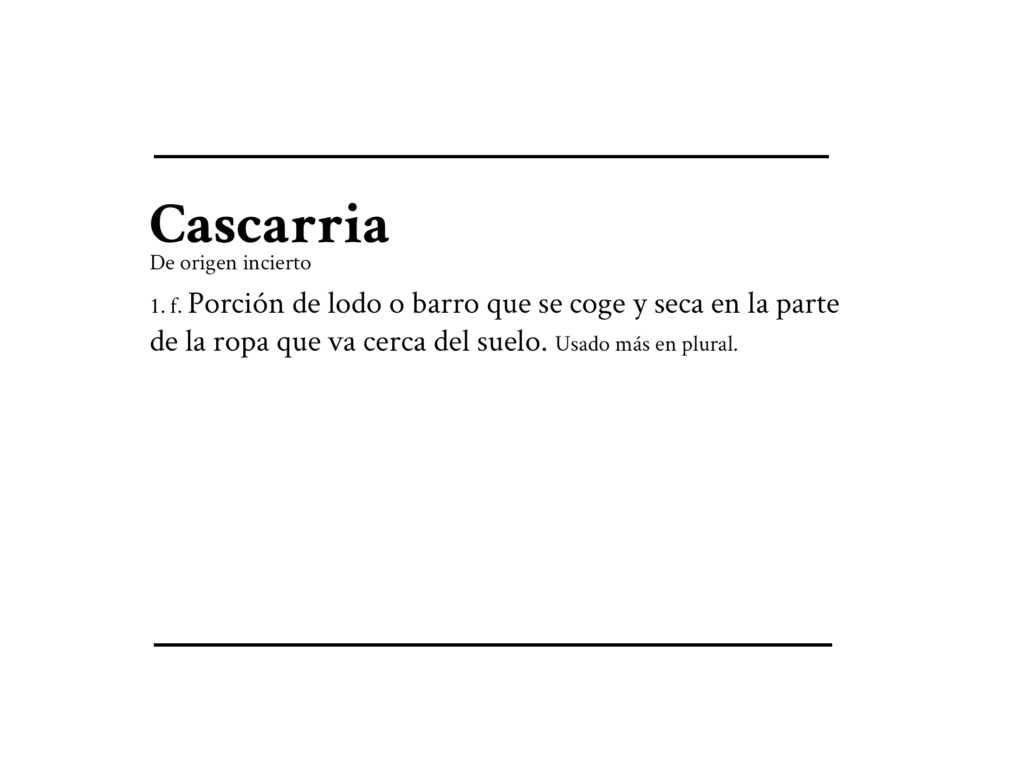
Cascarrias are those mud splashes that dry on our clothes when we go to the countryside. This is one of those many words that, although once commonly used in our villages, are increasingly falling into disuse and must be preserved.
With this, we intend to allude to nature, to our relationship as human beings with it, and to the relationships we establish with each other through it.
Furthermore, the term cascarrias expresses the transition to a place that, in our case as a project, is promoting the transition toward a more inclusive, just, and equitable society.
Cascarrias is a project that aims to preserve and share the valuable natural and cultural legacy that older generations of Ablitas and other villages in the Ribera de Navarra region left us in the form of landscape, biodiversity, traditions, knowledge, and language. It also seeks to inspire reflection on various issues affecting our society and the environment, and to create new narratives through photography and art to inspire people from other places.
This project seeks to build a bridge between generations that have stopped transmitting this knowledge orally, through digital tools and innovative awareness-raising activities. This project aims to reflect on various issues affecting our society and the environment, creating a critical spirit within society and promoting care among people and the environment.
Cascarrias is a transdisciplinary project that addresses a wide variety of topics related to nature and culture in the rural world. Thus, this revolves around the concept of biocultural diversity, conceived as the variety of natural and cultural systems (including linguistic diversity), the inextricable links that exist between them, and how they have developed over time through mutual adaptation and coevolution. In this way, we aim to gather knowledge, practices, and documents from our elders by conducting interviews, organizing workshops and discussion groups, and implementing citizen science initiatives.
Through this, we seek to promote dialogue and knowledge between different generations, placing special emphasis on young audiences not only being interested in these issues but also reflecting on concepts as important as their own cultural identity. We try to approach this from an inclusive perspective, understanding it as a prism with numerous perspectives such as gender, sexuality, origin, etc., and a sense of belonging in current rural contexts.