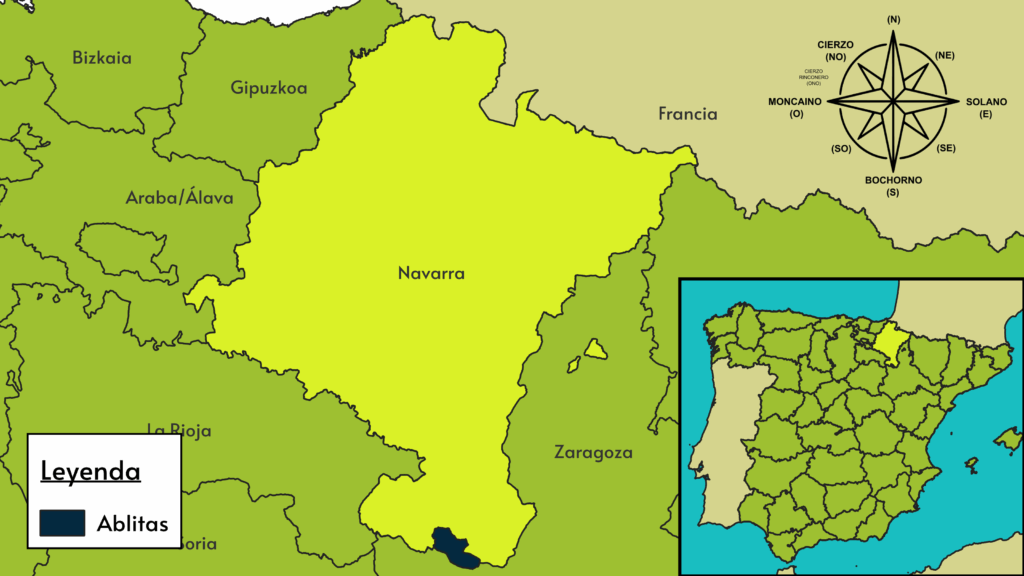
In this section, you’ll find a series of resources resulting from the Cascarrias project that will provide you with information on biodiversity, culture, history, and more in the Ribera de Navarra region.
IMAGE GALLERY
If you have older or more recent photos you’d like to send us, you can do so at the following email address:

DOCUMENTARY “HAPPY LIFE OF MISERY”
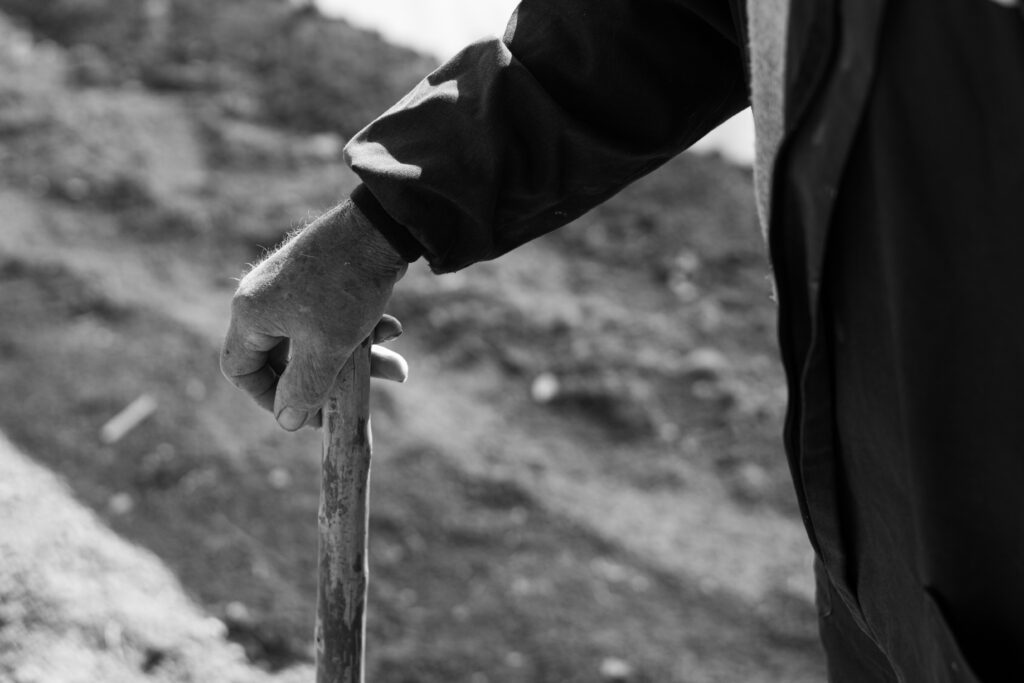
Three men and two women came from Monterrey riding on horseback on the night of January 5, 2024. They were said to carry in their saddlebags, in the form of a documentary, the experiences of a past life full with sorrow, but also with joy. They want the people of Ablitas and the entire world to be aware of this, so they can imagine a better future where values such as peace, camaraderie, justice, and equality prevail.
Despite the suffering of a land in which nothing was coming out of the blue, and even less water, the inhabitants of Ablitas, a small village in the south of Navarre (Spain), managed to make a living through effort and hard work. This also led to the formation of a particular character through which they learnt how to see the good side of things and enjoy even in the worst situations.
This documentary contains the last testimonies of some of those who had a HAPPY LIFE OF MISERY.
If you’re not familiar with the local vocabulary or with the Ablitas’ toponymy, here’s a cheat sheet to help you fully understand the documentary.
CHEAT SHEET
If you are not so familiarised with the local vocabulary of Ablitas, here below you can see the explanation a set of words and place names mentioned throughout the documentary HAPPY LIFE OF MISERY.
- Calvos: We call calvo(s), literally translated as bald(s), to the olives that have prematurely fallen during summer and have got dry, so they barely have flesh, and are almost only stone and skin. Despite their very low value, our elders, and specially women, were covering long distances to pick them from the ground and sell them or use them to make oil or soap. About to these olives there is a saying “he/she doesn’t even leave the calvos” to refer to someone that takes everything, even if it is something with low value. (Min. 31:54)
- Jesusperdoname: Pronounced with the typical accent of the south of Navarre (Jesusperdonáme) and literally translated as Jesusforgiveme, was the way in which Uncle Parrando, an old man from Ablitas, was calling money. (Min. 40:44)
- Txaranga (or charanga): Street music band typical from festivals and composed mainly of brass instruments. (Min. 35:40)
AUDIOVISUAL ARCHIVE
OLD OCCUPATIONS
Natural resources in Ablitas were once used for many purposes, and numerous crafts were created. These activities require a range of knowledge accumulated over generations, which unfortunately is being lost with the industrialization of recent decades.
Although these videos come from other locations, they show methods similar or identical to those commonly used in Ablitas.
May these occupations not be forgotten!
RTVE DOCUMENTARY SERIES: EL HOMBRE Y LA TIERRA
The famous documentary series on Iberian fauna that shaped an entire generation is back. We’ll never tire of listening to the great naturalist and educator Félix Rodríguez de la Fuente, who fostered knowledge and love for our country’s fauna.
We wanted to honor him by making a selection of some of the videos that showcase the fauna that can be seen in places like Ablitas.
Déjate impresionar por el precioso plumaje multicolor de esta ave estival.
MAPS